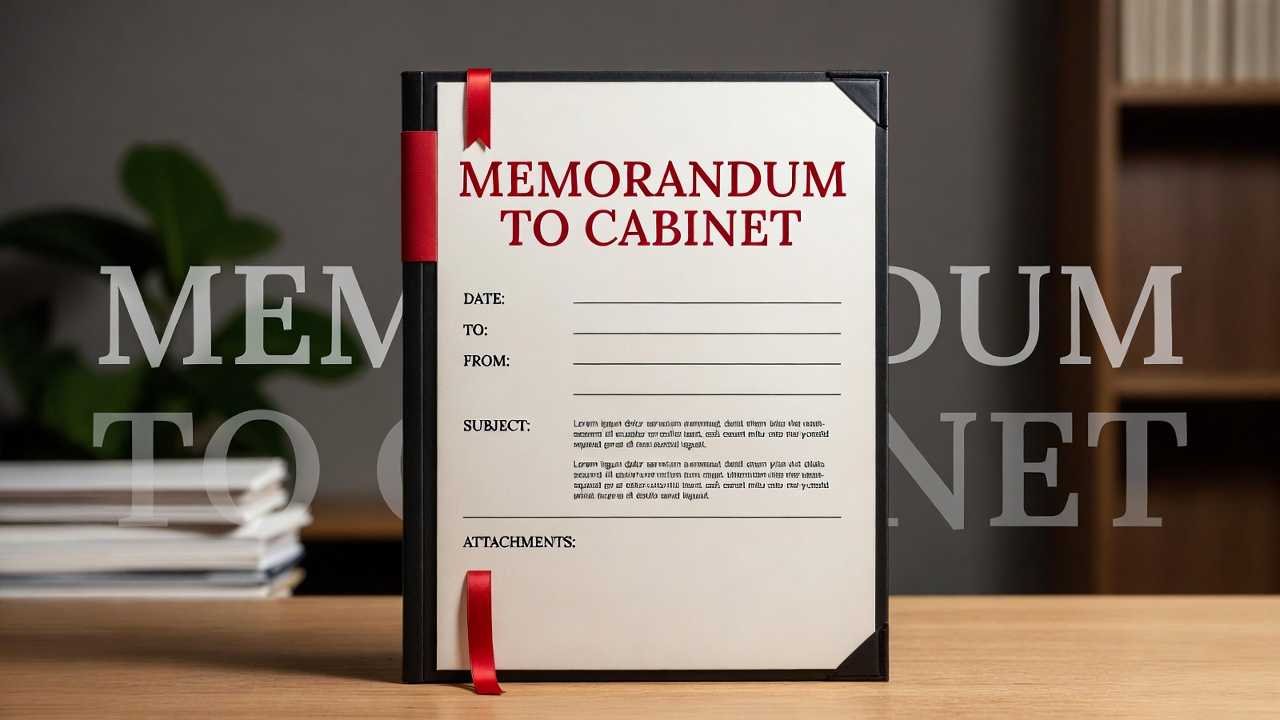
Memorandum to Cabinet
Have you ever wondered how big government decisions actually get made? It might seem like a mystery, but there is a clear path. At the heart of almost every major government policy or new program is a single, powerful document. This document is called a memorandum to cabinet. Think of it as a formal request from one minister to the entire cabinet. It asks for their approval to move forward with a new idea . This idea could be anything from building a new bridge to creating a program that helps small businesses grow. Without this important paper, big changes simply cannot happen. It is the first real step in turning a promise made during an election into a real service that helps you and your family. It is the blueprint for action, and understanding its role helps you see how your government works for you every single day.
The Main Goal: Seeking a Cabinet Decision
The primary purpose of a memorandum to cabinet is to get a “yes” or a “no.” A minister writes it when they need their colleagues, the other ministers, to agree on a specific course of action . It is not just a simple memo asking for opinions. It is a detailed argument. It lays out a problem and then offers a clear solution. For example, if the Minister of Health wants to improve mental health services, they would write a memorandum to cabinet. They would explain why the current system is struggling. Then, they would present their plan to fix it. This plan includes how much it will cost and why their proposed way is the best option. The goal is to give every minister all the facts they need to make a smart, collective choice for the country.
When Does a Minister Bring an Item to Cabinet?
You might be curious about when a minister decides to write a memorandum to cabinet. They don’t write one for every tiny issue. It is reserved for big, important matters that affect many people. A minister will bring a proposal forward when they want to launch a brand-new policy . They also use it to deliver on promises made in an election or a Speech from the Throne. For instance, if the government promised to lower the cost of child care, the responsible minister would use a memorandum to cabinet to outline exactly how to do it. They also use this process when a plan might be controversial or when it will impact what other ministers are doing. It is all about teamwork and making sure everyone is on the same page before moving ahead.
How a Memorandum to Cabinet Gets Created
Creating a memorandum to cabinet is not a one-person job. It is a team effort that involves many skilled public servants. The process starts long before the minister signs it. Experts in the department research the problem and talk to other government agencies . They have to make sure their idea does not cause problems for someone else’s work. They also talk to people outside of government, like community groups or business owners, to get their views. This careful planning is what makes the proposal strong. By the time the minister presents it to cabinet, the idea has been tested and improved. This hard work behind the scenes ensures that when you finally hear about a new government program, it has already been thoroughly checked for any issues.
The Key Parts of a Strong Memorandum
A good memorandum to cabinet is like a well-written story. It has a clear beginning, middle, and end. It starts by stating the issue in just one or two sentences so every minister immediately understands the topic . Then, it presents the recommended plan. This is the most important part. It explains why this plan is the best choice and looks at other options that were considered but not chosen. The document must also be honest about any risks. For example, it might talk about potential challenges in getting the program started. Finally, it must clearly state the total cost. This high-level information on resources helps the cabinet decide if the plan is affordable and worth the investment .
The Role of Central Agencies in the Process
Once a department writes a draft of the memorandum to cabinet, it doesn’t go straight to the cabinet table. First, it is reviewed by central agencies like the Privy Council Office. These groups act as the referee and coach for the whole government . They make sure the proposal is high-quality and fits with the government’s overall direction. They ask tough questions. Does this idea overlap with another minister’s project? Is the cost realistic? They help shape the document so it is ready for ministers to discuss. This review process is vital. It catches small problems before they become big ones. It ensures that when the document reaches the ministers, it is polished and makes a strong case that serves the entire country, not just one department.
The Journey Through a Cabinet Committee
Before the full cabinet makes a final call, most memorandum to cabinet documents go to a smaller group first. This is called a cabinet committee . There are different committees for different topics, like the economy, social affairs, or the environment. The minister presents their proposal to this smaller group of colleagues who have expertise in that area. They have a deep discussion. They ask detailed questions and suggest small changes. This is where the real work happens. It is a chance to dig into the details without the pressure of the full cabinet. This focused discussion helps build support for the idea. It makes the proposal even stronger before it moves to the final step.
From Committee to Full Cabinet: The Final Decision
After a committee fine-tunes the proposal, it goes to the full cabinet for ratification. This means the entire group of ministers gives their final approval . At this meeting, they review the work of the committee. They make the ultimate decision on the memorandum to cabinet. They can approve it exactly as written. They might approve it but with some new conditions. In some cases, they might decide to delay the decision and ask for more information. Once cabinet makes a decision, it becomes official. This is when a policy idea truly comes to life. The decision is recorded, and government departments can finally start the real work of building the program or service that Canadians will use.
Why Confidentiality is So Important
You might wonder why the contents of a memorandum to cabinet are kept secret. This is a crucial part of how government works. It protects something called cabinet solidarity . Ministers need to be able to speak honestly and debate ideas freely. They need to argue for their point of view without worrying that their words will become public the next day. This private debate allows them to change their minds and find the best solution. Once a decision is made, however, all ministers must publicly support it. This unity is what makes the government strong and stable. So, the confidentiality of the memorandum is what allows for honest conversation behind closed doors, leading to better decisions for everyone in the long run.
Real-World Examples of Cabinet Memoranda
To really understand this, it helps to think of real examples. Imagine a Minister of Agriculture wants to help farmers deal with a drought. They would prepare a memorandum to cabinet seeking funds for emergency relief. Or, think of a historical example. During World War I, Winston Churchill wrote a powerful cabinet memorandum sharing his strong views on the Battle of the Somme . His goal was to influence the war strategy of the British government. Today, a minister might write one to create a new national museum or to approve a treaty with another country. Whether it is a historic war document or a plan for a new community center, the purpose is the same: to inform and persuade the government’s top decision-makers.
How This Process Creates Better Public Policy
The long journey of a memorandum to cabinet might seem slow, but it actually creates better results for you. This process forces ministers and their teams to think through every angle of a problem. They have to consider the costs, the risks, and how it affects other parts of society. They must consult with experts and the public . This careful work means that when a new policy finally launches, it is less likely to have major problems. It has been stress-tested by some of the smartest people in government. So, the next time you see a new government service, remember the memorandum to cabinet that made it possible. It is a sign that people worked hard to create a thoughtful plan designed to truly help.
Conclusion: Your Front-Row Seat to Government in Action
The memorandum to cabinet is more than just a dusty government document. It is the engine of progress. It is the tool our elected officials use to turn ideas into action and promises into reality. From the initial research to the final decision around the cabinet table, this process ensures that big decisions are made carefully, thoughtfully, and with the public good in mind. Now that you know the story behind these important papers, you can see the government’s work in a new light. It is a world of planning, debate, and teamwork. Next time you hear about a new government initiative, think about the powerful memorandum to cabinet that started it all. If you found this guide helpful, please share it with someone who wants to understand how their country really works.
Frequently Asked Questions
What is the simple definition of a memorandum to cabinet?
It is a formal document that a minister writes to ask the rest of the cabinet for permission to start a new project, change a law, or spend money on a new program .
How is a memorandum to cabinet different from a Treasury Board submission?
A memorandum to cabinet asks for approval on the big idea or policy itself. A Treasury Board submission comes later and asks for permission to spend the money and handle the detailed management of the program .
Who actually writes the memorandum to cabinet?
While the minister signs it, it is written by a team of expert public servants in their department. They work with lawyers, policy experts, and financial officers to make sure it is accurate .
How long does it take to prepare one of these documents?
It can take many months. The process includes a lot of research, meetings with other departments, and careful writing. The goal is to get it right before it ever goes to ministers .
What happens after the cabinet approves a memorandum?
After approval, the real work begins. The responsible department can start putting the plan into action. This might mean hiring staff, building things, or writing the final laws needed to make the new policy a reality
About the Author