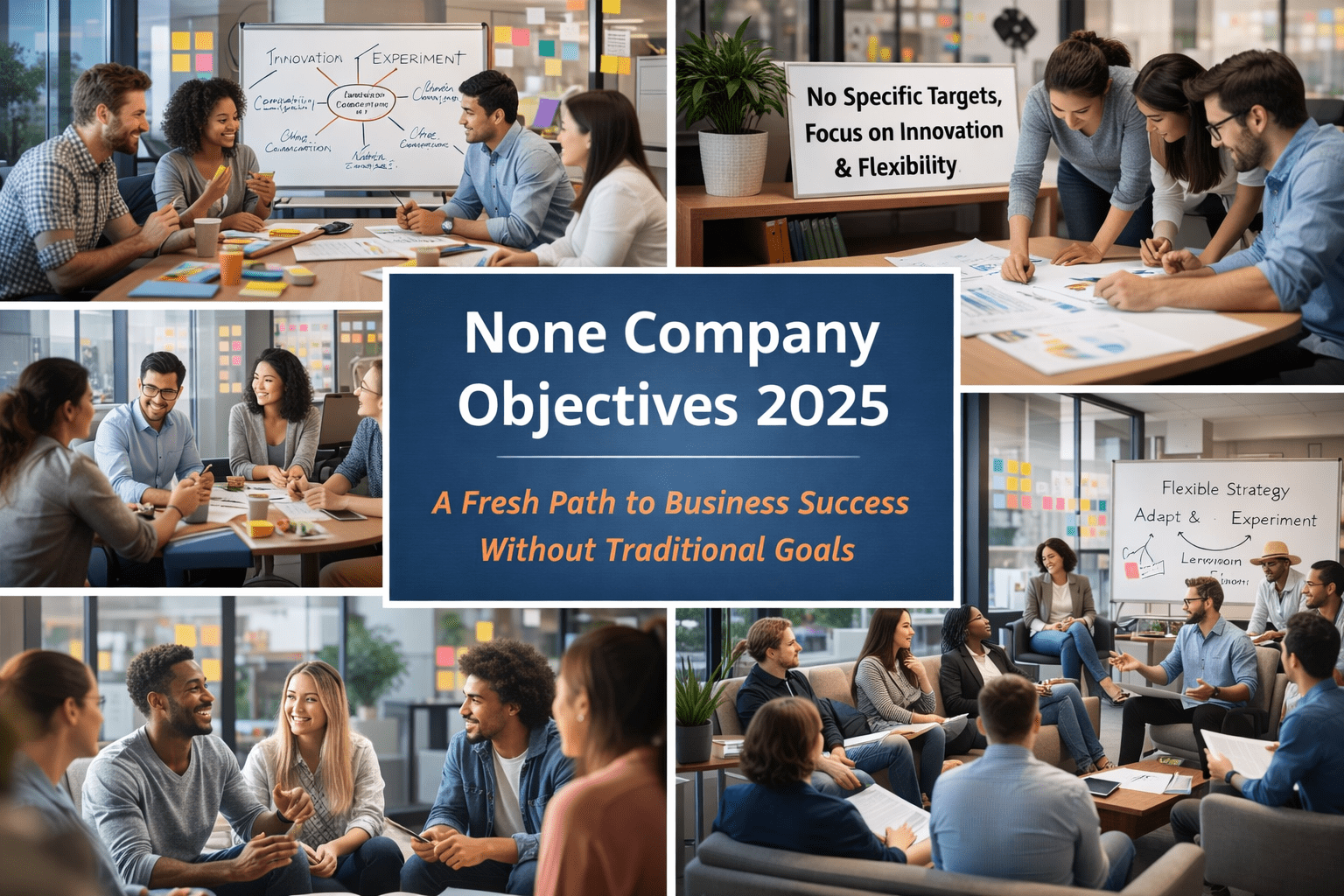
None Company Objectives 2025
Introduction: Why Traditional Business Goals Are Changing in 2025
The way we think about company goals is shifting fast in 2025. More businesses are asking: what happens when we remove rigid targets? This question leads us to explore none company objectives 2025 approaches that feel different from old-school planning. You might wonder if a company can succeed without clear goals. The answer might surprise you. Many forward-thinking teams now focus on flexibility rather than fixed destinations. They build systems that adapt quickly instead of chasing numbers that become outdated fast. This fresh thinking helps businesses stay alive in markets that change overnight. When you let go of strict targets, you create space for real creativity to bloom. Teams feel less pressure and more freedom to solve problems in new ways. The none company objectives 2025 movement isn’t about having no direction at all. It’s about choosing better ways to guide your business forward. This article walks you through practical ideas that work in today’s fast world. You’ll learn how to build a company that thrives without being trapped by old goal-setting methods.
Understanding the None Company Objectives 2025 Philosophy
What does it really mean to have none company objectives 2025? Let’s break this down simply. This approach means stepping away from rigid, numbers-only goals that lock you into one path. Instead of saying “we must hit 1 million sales by December,” you focus on building strong habits and systems. The idea comes from noticing how strict goals often limit creative thinking. When teams fixate on one target, they miss other chances that pop up along the way. The none company objectives 2025 mindset values direction over destination. Think of it like sailing rather than driving. Sailors adjust to wind and waves instead of following a straight line. Your business can work the same way. You keep your mission clear but stay open to changing how you get there. This philosophy gained traction because markets move so fast now. A goal you set in January might make no sense by March. Companies using none company objectives 2025 approaches report happier teams and better problem-solving. They spend less time tracking numbers and more time doing meaningful work. This doesn’t mean you stop measuring success entirely. You just choose smarter ways to know if you’re moving right.
Why Companies Are Moving Away From Traditional Goal Setting
Old-school business goals come with hidden problems that many leaders ignore. Think about the last time your team stressed over hitting a quarterly number. Did that pressure help or hurt your work? Often, strict targets push people to cut corners or hide problems. The none company objectives 2025 trend grows because leaders see these issues clearly. When you tie bonuses to specific numbers, people focus on those numbers only. They miss the bigger picture of building a healthy company. Another big problem with traditional goals is how fast they become outdated. Imagine setting a sales target in January based on last year’s trends. By March, your whole market might shift, but you’re still chasing that old number. This wastes energy and frustrates teams who know they’re chasing the wrong thing. Companies adopting none company objectives 2025 methods avoid this trap entirely. They stay light on their feet and ready to pivot when needed. Also, strict goals often kill the internal drive that makes work satisfying. People do better work when they feel connected to purpose, not just chasing targets. The move away from traditional goals isn’t laziness. It’s smart adaptation to how modern business really works.
Building a Purpose-Driven Culture Without Fixed Targets
How do you build a strong company culture when you have none company objectives 2025 in place? This question matters because culture drives everything. Without clear targets, you need something else to guide daily choices. That something is shared purpose and values. When everyone understands why the company exists, they make better decisions without needing constant direction. Think about companies you love to buy from. They likely have a clear mission that shines through everything they do. This mission becomes the compass that replaces traditional goals. Teams using none company objectives 2025 approaches spend more time talking about purpose than about numbers. They ask questions like “does this help our customers?” rather than “does this hit our target?” This shift changes how people show up to work each day. They feel more connected to the real impact of their efforts. Purpose-driven cultures also attract better people who care about more than just a paycheck. These teams solve problems creatively because they’re not trapped by “that’s not my job” thinking. The none company objectives 2025 model works best when purpose runs deep through every team member’s daily experience. Leaders nurture this by sharing stories of impact and celebrating good decisions, not just good numbers.
Flexible Planning: The Smart Alternative to Rigid Goals
Planning still matters when you embrace none company objectives 2025 thinking. You just plan differently. Flexible planning means setting broad directions while staying open to change. Imagine drawing a circle on a map instead of marking one exact spot. Your team knows which area to explore, but they can choose the best path as they learn more. This approach fits modern business much better than old five-year plans that gather dust on shelves. Companies using none company objectives 2025 methods review direction often, sometimes weekly, to check if they’re still heading the right way. They ask simple questions: what did we learn this week? what should we do differently? This keeps everyone moving together without locking into choices that might not work later. Flexible planning also means holding resources back instead of committing everything early. When you keep some powder dry, you can jump on new chances as they appear. Teams feel empowered to spot opportunities and act fast because they don’t need permission for every small pivot. The none company objectives 2025 approach to planning treats the future as something you discover, not something you predict perfectly. This reduces anxiety when things don’t go as expected because you never expected to know everything from the start.
Measuring Success When You Have None Company Objectives 2025
You might wonder how to know if you’re winning without traditional targets. Great question! Measuring success with none company objectives 2025 approaches looks different but works really well. Instead of checking if you hit a number, you look at signs of health and momentum. Think about how you know a plant is healthy. You don’t measure exactly how tall it should be each week. You look at leaf color, new growth, and soil condition. Business works the same way with this approach. Teams track leading indicators that show future health rather than lagging numbers that only tell you what already happened. Customer feedback becomes gold because it shows if you’re truly helping people. Employee energy and ideas matter more than ever because they show your culture is working. Cash flow gets attention because it shows you can keep going. The none company objectives 2025 measurement system includes regular check-ins where teams ask: are we more capable than last month? are customers happier? are we learning fast enough? These questions reveal real progress better than hitting an arbitrary sales number. You also track what you’re learning about your market and customers. This knowledge becomes a form of success that pays off forever, not just this quarter.
Empowering Teams Through Autonomy and Trust
Nothing kills good work like micromanagement. The none company objectives 2025 approach naturally fights this problem because you can’t tightly control people when you don’t have rigid targets. Instead, you must trust your team to make good choices. This trust pays back huge dividends in energy and creativity. When people feel trusted, they act like owners rather than just workers. They spot problems early and fix them without waiting for permission. They bring ideas forward because they know leadership values their thinking. Companies using none company objectives 2025 methods invest heavily in hiring people who share their values and then get out of their way. This doesn’t mean no guidance at all. Leaders still set clear boundaries about what matters most. But within those boundaries, teams have real freedom to figure out the best path. This autonomy creates work that people actually enjoy doing. They’re not just following orders but solving puzzles and building things. The energy in such workplaces feels completely different from places where every move is tracked and measured. People stay longer, work harder, and care more about results. The none company objectives 2025 model proves that when you treat adults like adults, they act like adults.
Innovation Thrives Without Strict Performance Targets
Have you noticed how pressure often kills creativity? When people stress about hitting numbers, they play it safe. They copy what worked before instead of trying new things. This is why none company objectives 2025 environments often spark more real innovation. Without the fear of missing a target, teams feel free to experiment. They try wild ideas knowing that failure won’t cost them their jobs. This safety changes everything about how people think and work. Real breakthroughs almost never come from playing it safe. They come from people trying things that might fail but could change everything. The none company objectives 2025 mindset creates space for these experiments. Smart companies using this approach set aside time and resources specifically for trying new things. They celebrate learning from failures just as much as celebrating wins. This builds a culture where innovation becomes natural, not forced. Teams notice problems customers have and try fixes without waiting for a big project approval. Small experiments run all the time, and the best ones grow into bigger changes. This beats the old model where innovation only happens in special labs or during planned events. When innovation becomes everyone’s daily work, amazing things happen naturally.
Customer Relationships Deepen When Goals Shift
Customers can feel when a company cares more about them than about hitting numbers. Think about your own experiences. When you call support, can you tell if they’re rushing to meet call-time targets? It shows in their voice and how they treat you. Companies using none company objectives 2025 approaches free their people to truly help customers without artificial limits. Support teams can spend as long as needed to solve problems right. Sales people can recommend products that truly fit, even if it means selling less. This honesty builds trust that no marketing campaign can buy. Customers stick with companies they trust, even when competitors offer lower prices. They tell friends about great experiences. They forgive mistakes more easily because they know you genuinely care. The none company objectives 2025 model recognizes that customer love is the only goal that really matters long-term. Everything else flows from that. When you consistently put customers first, they take care of your business. This creates a beautiful cycle where doing good leads to doing well. Teams feel proud of the real help they provide, which makes them want to help even more. This positive energy reaches customers in ways you can’t fake.
Leadership Changes When You Drop Traditional Objectives
Leading a company with none company objectives 2025 requires different skills than old-style management. You can’t just hand down targets and check results later. Instead, you must become a gardener who creates conditions for growth rather than a mechanic who fixes problems. This means spending more time listening than talking. You watch for what’s working well and find ways to spread it. You notice when teams struggle and offer support without taking over. Leaders in this model focus on removing obstacles rather than giving orders. They ask great questions instead of having all the answers. The none company objectives 2025 approach reveals who the real leaders are because you can’t hide behind authority. Your team follows you because they want to, not because they have to. This kind of leadership feels more rewarding but also more demanding. You must stay curious and humble, always learning alongside your team. You celebrate their wins and share their struggles. This connection creates loyalty that no bonus program can match. Leaders who thrive in none company objectives 2025 environments love seeing others grow and shine. Their ego doesn’t need to be the smartest person in the room. They find joy in watching their team accomplish amazing things together.
Team Collaboration Improves Without Competition
Traditional goals often set teams against each other. Sales competes with marketing for budget. Different departments guard their resources instead of sharing. The none company objectives 2025 approach naturally reduces this harmful competition because success isn’t scarce. When one team wins, everyone wins. This changes how people treat each other day to day. Teams share information freely because hoarding it doesn’t help anyone. People from different departments help each other solve problems because they’re not rivals. The whole company moves together rather than pulling in different directions. This collaboration creates better results than any single team could achieve alone. Problems get solved faster because more brains work on them. Ideas get better because they’re tested by people with different views. The none company objectives 2025 environment makes work more fun too. People enjoy coming to work when they feel part of something bigger than their own job. They make friends and build relationships that make hard days easier. This positive culture shows in everything from how meetings run to how people treat customers. Teams that genuinely like each other do better work. It’s that simple.
Work-Life Balance Naturally Improves With This Approach
Have you noticed how traditional goals often push people to work crazy hours? When December 31st approaches and targets aren’t met, panic sets in. People sacrifice sleep, health, and family to hit numbers that won’t matter next year. The none company objectives 2025 model eliminates this unhealthy cycle completely. Without arbitrary deadlines tied to the calendar, work flows more naturally. Some weeks are busy, some are slower. People can adjust their energy to match what’s needed without burning out. This sustainable pace actually produces better results over time than sprinting then crashing. Teams using none company objectives 2025 methods report less stress and more satisfaction. They take breaks when needed and come back refreshed. They handle family needs without guilt because the culture respects whole lives, not just work hours. This balance makes people more loyal to companies that treat them like humans. They stay longer and contribute more because they’re not constantly depleted. The quality of work improves too because tired people make mistakes. Fresh, rested people catch problems before they become crises. Everyone wins when work fits into life instead of consuming it.
Future-Proofing Your Business Through Adaptive Systems
Markets change faster than ever. What worked last year might fail today. This reality makes none company objectives 2025 thinking more valuable than traditional planning. Adaptive systems bend without breaking when conditions shift. They’re built to learn and change rather than stick to plans made in the past. Think about how nature handles change. Forests don’t have five-year plans, yet they thrive through all kinds of conditions. They adapt moment by moment to sun, rain, and wind. Your business can work the same way when you let go of rigid targets. The none company objectives 2025 approach builds this flexibility into everything you do. Teams develop muscles for change by practicing it daily. They learn to spot early signals that something’s shifting. They try small responses before problems grow big. This agility becomes your biggest advantage against slower competitors stuck in old planning cycles. You’ll move faster, learn quicker, and adapt better than companies still chasing quarterly numbers. Building adaptive systems takes work up front but pays off forever. Each change you handle well makes you stronger for the next one.
Practical First Steps Toward None Company Objectives 2025
Ready to try this approach in your own work? Start small rather than changing everything at once. Pick one team or project to experiment with none company objectives 2025 methods. Remove rigid targets and replace them with clear purpose and regular learning conversations. See what happens. Watch how people respond to more freedom and trust. You’ll likely notice more energy and ideas flowing right away. Another practical step is changing how you run meetings. Instead of reviewing progress toward old goals, ask teams what they’re learning and where they see opportunity. Shift from checking to exploring. This small change signals that you value learning over hitting numbers. You can also change how you celebrate wins. Praise smart choices and good thinking rather than just results. This tells people you care about how they work, not just what they produce. The none company objectives 2025 journey takes time, like any meaningful change. Be patient with yourself and your team as you learn new ways of working together. Keep what works and adjust what doesn’t. Your own experience will teach you what fits your unique situation.
Conclusion: Your Invitation to Try a Better Way
The none company objectives 2025 approach offers a refreshing path forward for businesses tired of the old goal chase. By letting go of rigid targets, you create space for what truly matters: purpose, people, and progress that feels good. This doesn’t mean abandoning all structure or measurement. It means choosing smarter guides for your journey. Your team will thank you for trusting them. Your customers will feel the difference in every interaction. Your business will adapt faster and grow stronger through all kinds of market conditions. The best part? You’ll actually enjoy the work more. Building something meaningful with people you respect beats chasing numbers every time. So why not give it a try? Start small, learn as you go, and see where this fresh path leads. The future belongs to companies that can dance with change rather than fight it. Make yours one of them.
Frequently Asked Questions
Q1: What exactly are none company objectives 2025?
None company objectives 2025 refers to an approach where businesses move away from rigid, numbers-based targets. Instead of setting specific goals like “increase sales 20%,” companies focus on direction, purpose, and building strong habits. This doesn’t mean having no goals at all. It means choosing more flexible guides that help teams adapt to change while staying true to their mission.
Q2: How do you measure success without traditional objectives?
Success gets measured through signs of health and momentum rather than hitting fixed numbers. Teams track customer feedback, employee energy, learning speed, and cash flow. They ask questions like “are we more capable than last month?” and “are customers happier?” These indicators show real progress better than arbitrary targets that might not even make sense anymore.
Q3: Can this approach work for small businesses just starting?
Yes, it works great for small businesses! In fact, new companies often benefit most from staying flexible. Without rigid targets, you can pivot quickly when you learn what customers really want. You avoid wasting time and money chasing goals that don’t fit your actual market. Many successful small businesses grow exactly this way naturally.
Q4: Won’t employees slack off without clear targets to hit?
Actually, most people work better when they feel trusted and connected to purpose. Strict targets often create stress that leads to burnout and cutting corners. When people understand why their work matters, they naturally want to do well. The key is hiring people who share your values and creating conditions where good work feels satisfying.
Q5: How often should teams check progress with this approach?
Regular check-ins work well, often weekly or bi-weekly. But instead of reviewing progress toward old goals, teams discuss what they’re learning and where they see opportunities. These conversations focus on direction and adjustment rather than measurement against fixed targets. The frequency matters less than keeping conversations open and honest.
Q6: What if investors or boards expect traditional quarterly targets?
This is a real challenge for some companies. You might need to translate your none company objectives 2025 approach into language traditional investors understand. Show them how flexibility and adaptation lead to better long-term results. Share stories of quick wins and smart pivots that happened because your team wasn’t trapped by rigid goals. Over time, results speak louder than methods.
About the Author